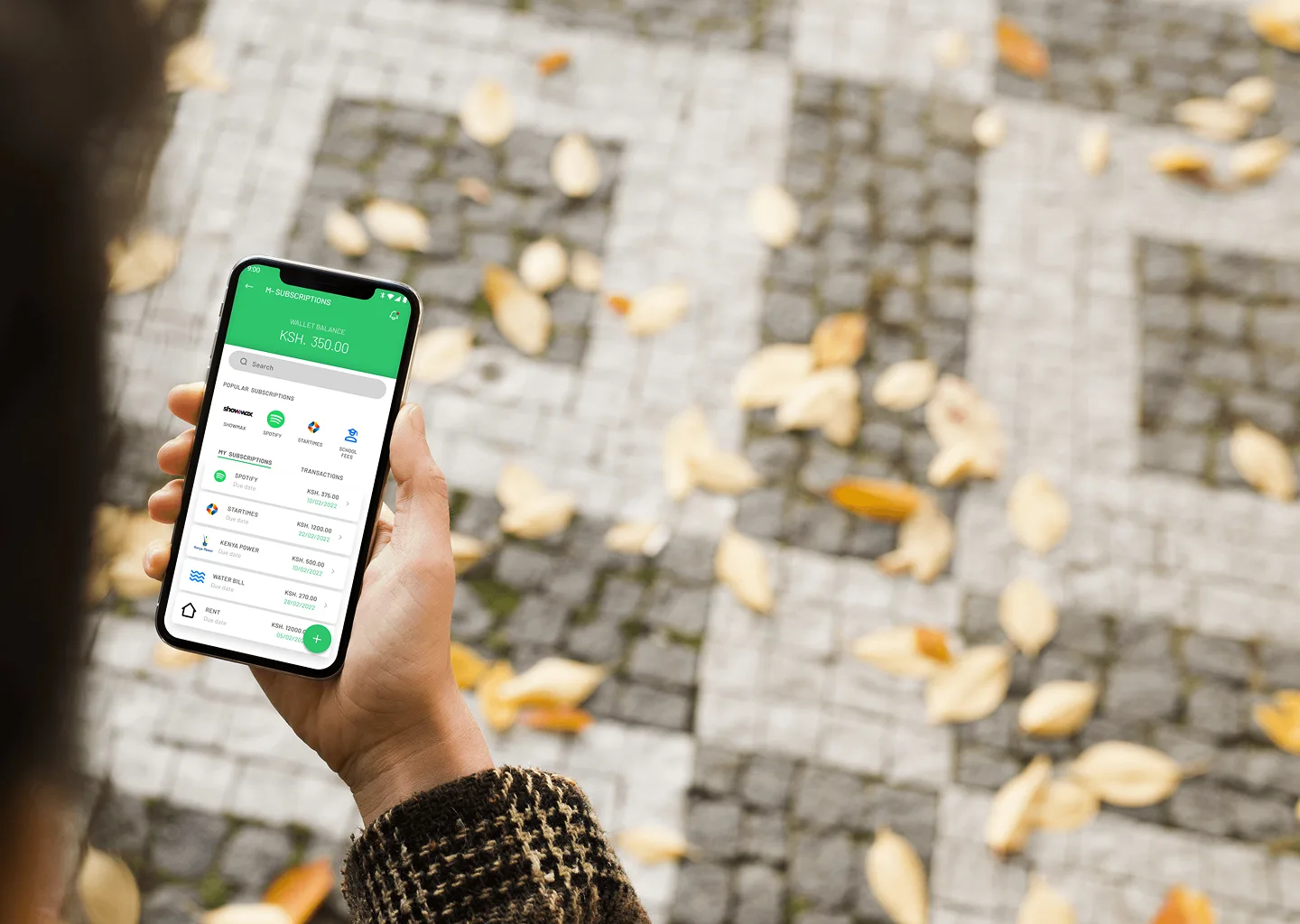
A gap in how users managed recurring payments
As part of expanding the M-PESA ecosystem, I identified a gap in how users managed recurring payments. Whether it was utility bills, subscriptions, monthly contributions, or recurring transfers to family members, users relied heavily on memory, reminders, or manual workarounds to stay on top of payment deadlines.
The result?
- Missed payments
- Service interruptions
- Late payment penalties
- Increased financial stress
How might we help customers manage recurring payments without having to remember every due date?
Product Lead & UX Designer
- Conceptualized the solution during an internal innovation challenge
- Led a team of five UX interns
- Facilitated research and discovery activities
- Defined the product vision and user experience
- Designed the end-to-end customer journey
- Developed and pitched the concept to stakeholders
What we learned from users
To validate the opportunity, we conducted user interviews and synthesized our findings through personas and empathy mapping.
- Manual workarounds — people maintained checklists, reminders, calendar alerts, and notes to keep track of recurring payments.
- Real consequences — customers frequently experienced service disruptions, late payment fees, and forgotten commitments.
- Automation was missing — existing tools provided reminders but payments still required manual action every month.
Empathy Map
The empathy map helped us capture how users were managing recurring payments emotionally and practically.
- “I have to make a list of bills to be paid for this month.”
- “I wish I could pay all my recurring payments automatically.”
- “Ooops, I forgot to pay Netflix again, the kids are gonna be so mad.”
- “Am so busy at work sometimes and snooze the reminders and forget about it.”
- Isn’t there an easy way to pay for these bills
- Makes a checklist of all the bills to be paid per month Set reminders for bill due dates
- Frustrated by forgetting payments
- Worried about missing another due date
- Overwhelmed by increasing recurring payments
Key takeawayUsers were not struggling because they lacked payment options — they were struggling because recurring payments demanded constant memory, tracking, and manual effort.
Three themes consistently emerged
- Fragmented subscriptions — customers struggled to manage multiple recurring payments across different services.
- Reminders, not automation — available tools provided reminders but didn't eliminate the need for manual payment.
- Businesses were affected — revenue collection became inconsistent whenever customers missed payment deadlines.
Who we were designing for
Two recurring customer profiles emerged, each balancing different financial commitments:

Responsible for managing household expenses across multiple bills and subscriptions.
Pay bills on time and eliminate unnecessary subscriptions.
- Missing payment deadlines
- Incurring overdue charges
- Service disconnections

Managing recurring transfers and monthly financial commitments alongside a busy schedule.
Receive timely reminders and ensure payments happen consistently.
- Too many recurring obligations
- Forgetting due dates due to a busy schedule
Users wanted recurring payments to happen reliably — without requiring constant attention.
The problem wasn’t paying. It was remembering to pay.
Recurring payments are predictable by nature, yet customers were repeatedly performing the same task every month. This presented an opportunity to remove friction entirely.
Set it once. Let it run.
The experience allows customers to:
- Schedule recurring payments
- Define payment frequency
- Prioritize important expenses
- Receive reminders
- Automate deductions where preferred
Key Design Principles
Reduce repetitive actions by allowing users to set up recurring payments once.
Support both smartphone and feature phone users through the M-PESA App and USSD (*334#).
Provide transparency and control over automated financial actions.
A lightweight recurring payments service
Automate recurring bills, subscriptions, and transfers.
View, edit, pause, or stop scheduled payments.
Opt for automatic deductions or receive reminders before payment dates.
Available through both the M-PESA Super App and USSD (*334#).
From intern challenge to live service
What began as an intern innovation challenge became one of Safaricom's most successful internal hackathon ideas. The concept progressed from prototype to production and evolved into a live M-PESA service used by millions of customers.
More importantly, it shifted M-PESA from being purely a transaction platform to supporting financial planning and recurring money management.
Adopted by 3.8M+ customers and generating over 2B in transaction value.
Beyond sending and receiving money
It helped customers:
- Stay on top of financial commitments
- Reduce missed payment deadlines
- Avoid unnecessary penalties
- Build more predictable financial habits
The experience transformed recurring payments from a task users needed to remember into a service they could trust.
The most impactful products often emerge from small, recurring frustrations
People weren't asking for a new payment system. They were asking for one less thing to remember.
Curious about the research or the design decisions behind this work?
Get in touch